

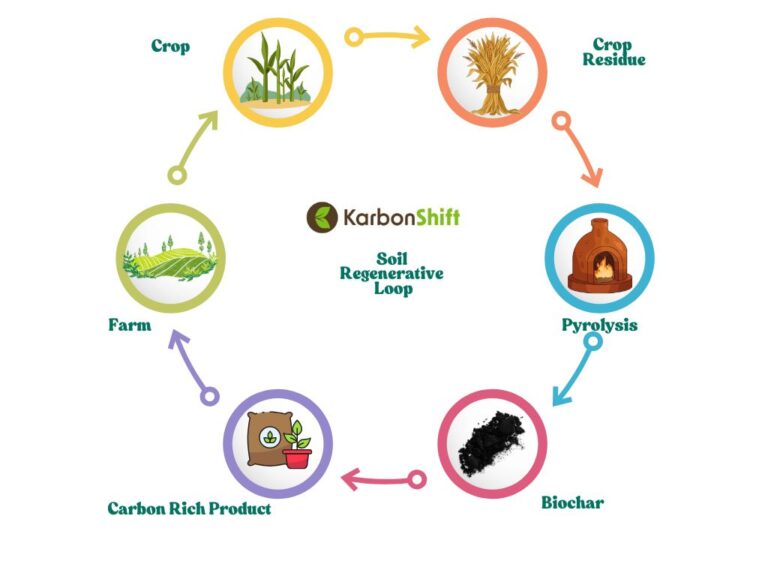
KarbonShift enables farmers to turn crop residues into raw biochar. We collect all the raw biochar, upgrade it into carbon-rich soil regeneration products, and return these products to farmers. This creates a regenerative loop that strengthens soil, reduces burning, and builds long-term village resilience.
Every step in the KarbonShift process is designed to be simple, local, and farmer-led. No complex machinery. No corporate dependency. Just people, knowledge, and a regenerative flow of carbon back to the soil.
Designed to be simple, practical, and village-friendly.

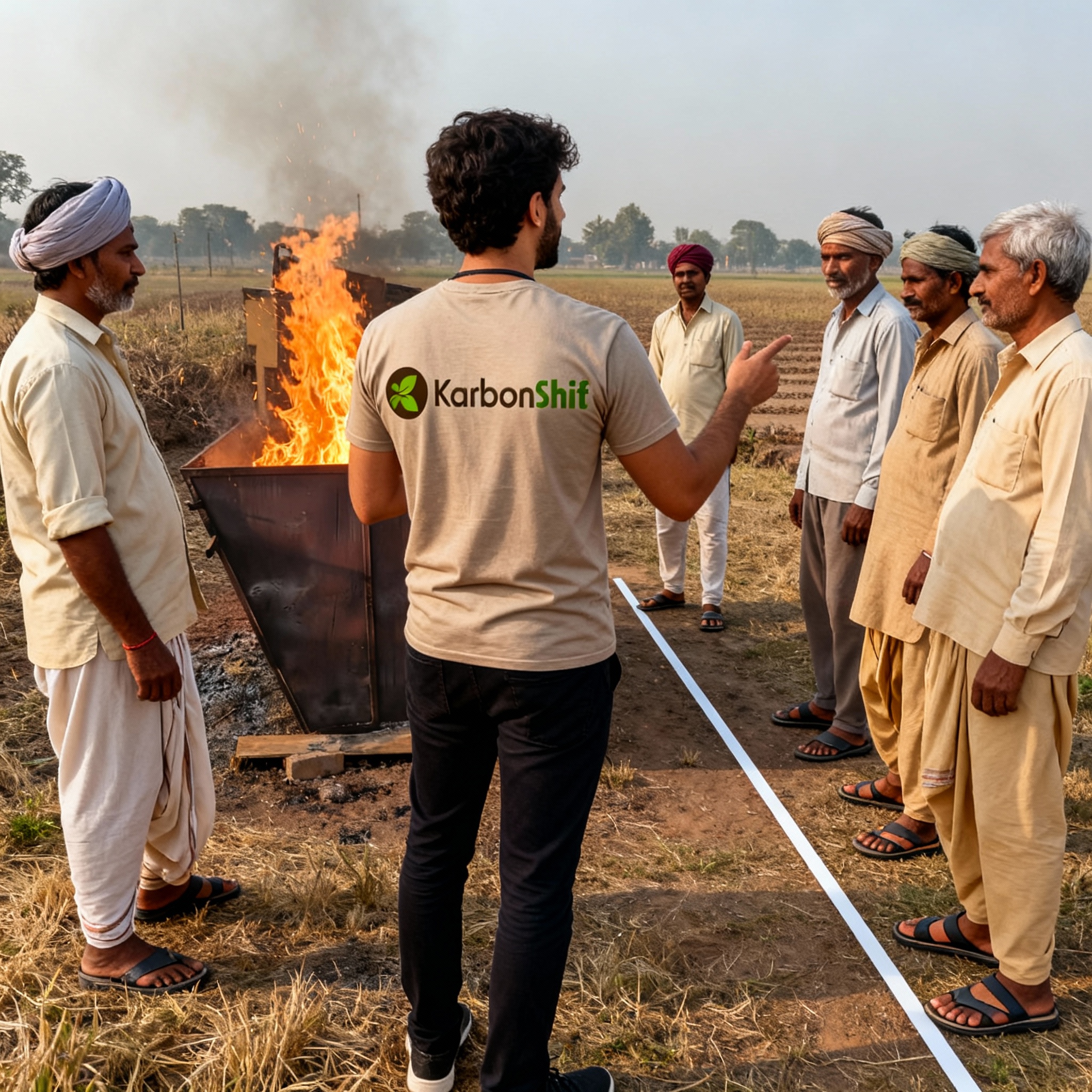
Instead of burning crop residues, farmers convert them into raw biochar using simple, village-ready techniques. This prevents smoke pollution, keeps carbon on the ground, and turns waste into a valuable resource for soil regeneration.
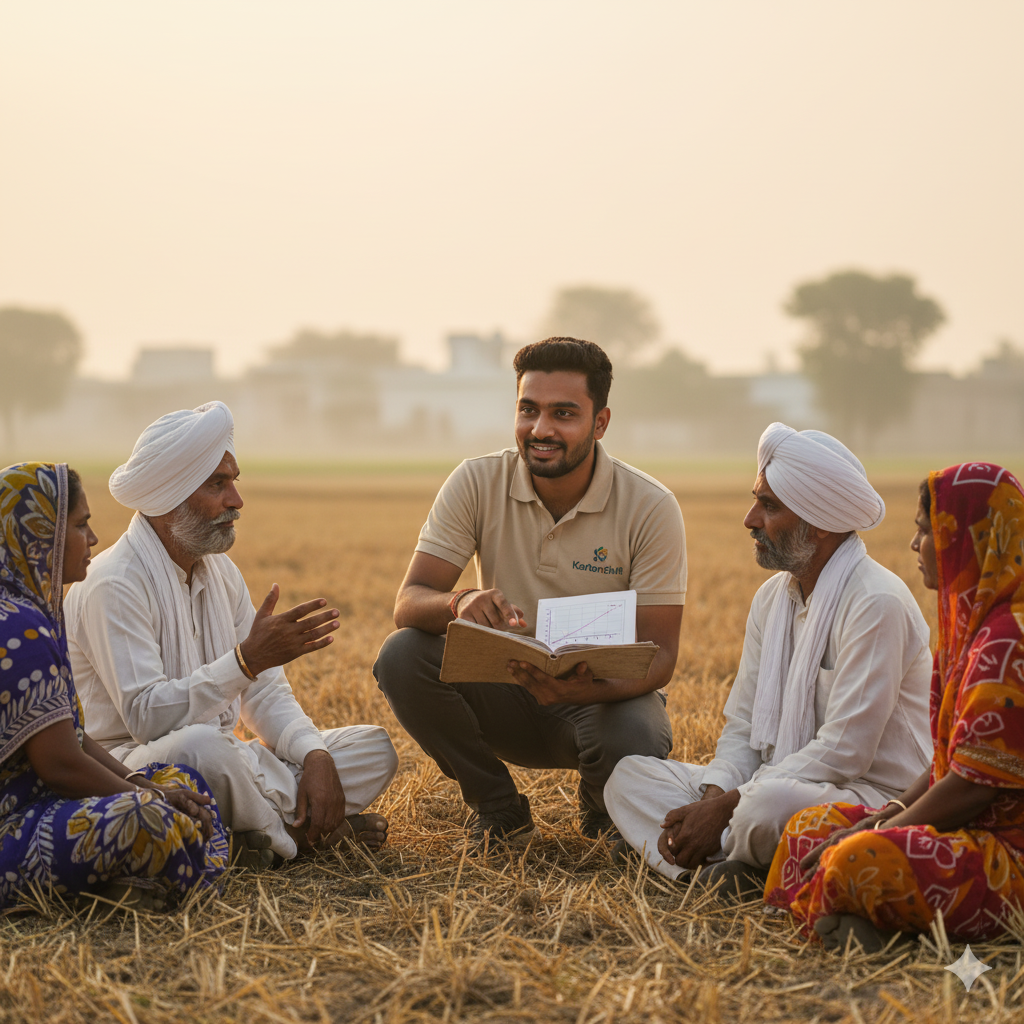
Local champions lead training and coordination. They help farmers adopt the method, ensure safe biochar production, and organize biochar batches for collection. Champions accelerate community adoption.
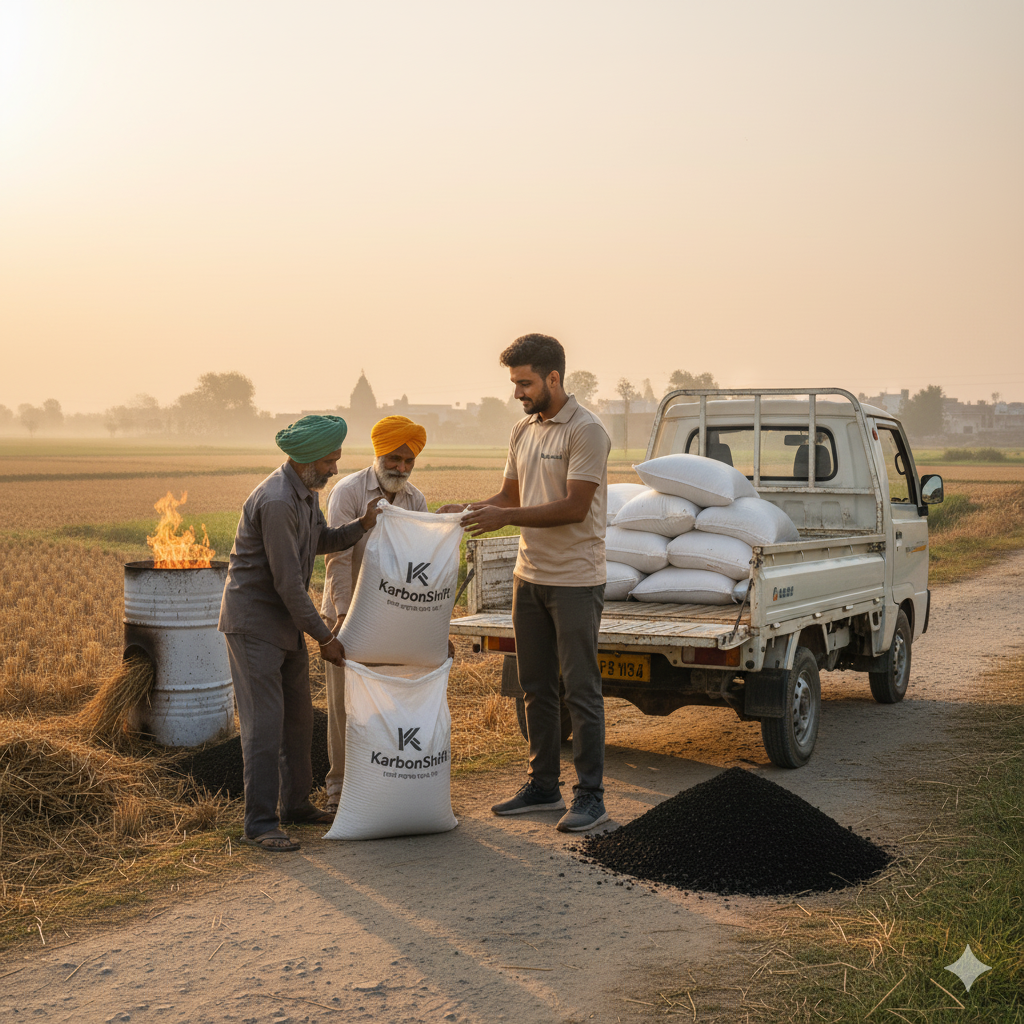
Farmers do not apply raw biochar to their soil. KarbonShift collects every batch of raw biochar to ensure safety, consistency, and quality control before it becomes a soil input.
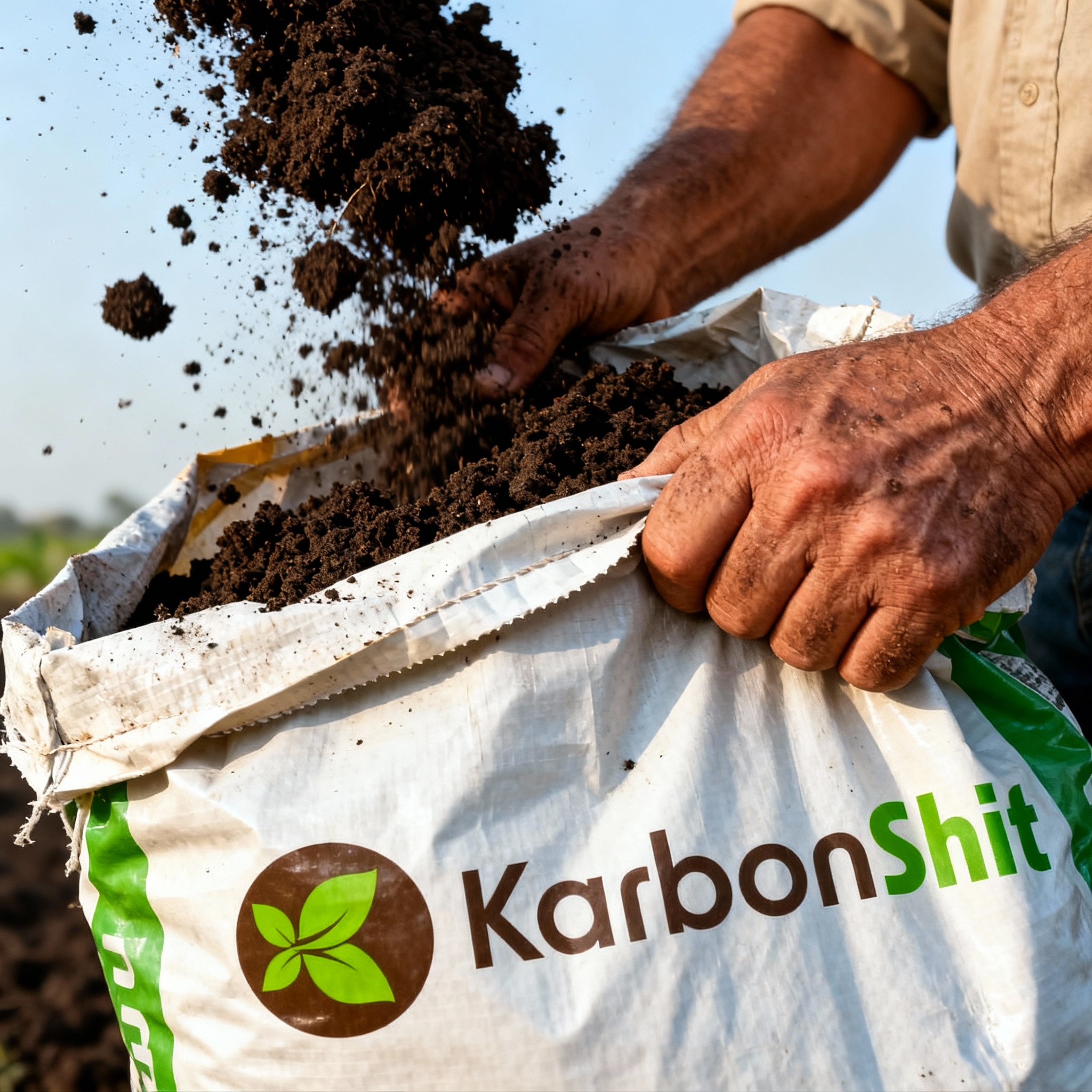
We refine raw biochar by enriching it with compost, nutrients, and beneficial biology. These carbon-rich regeneration products are ready-to-use, safe, and highly effective in improving soil structure and long-term fertility.
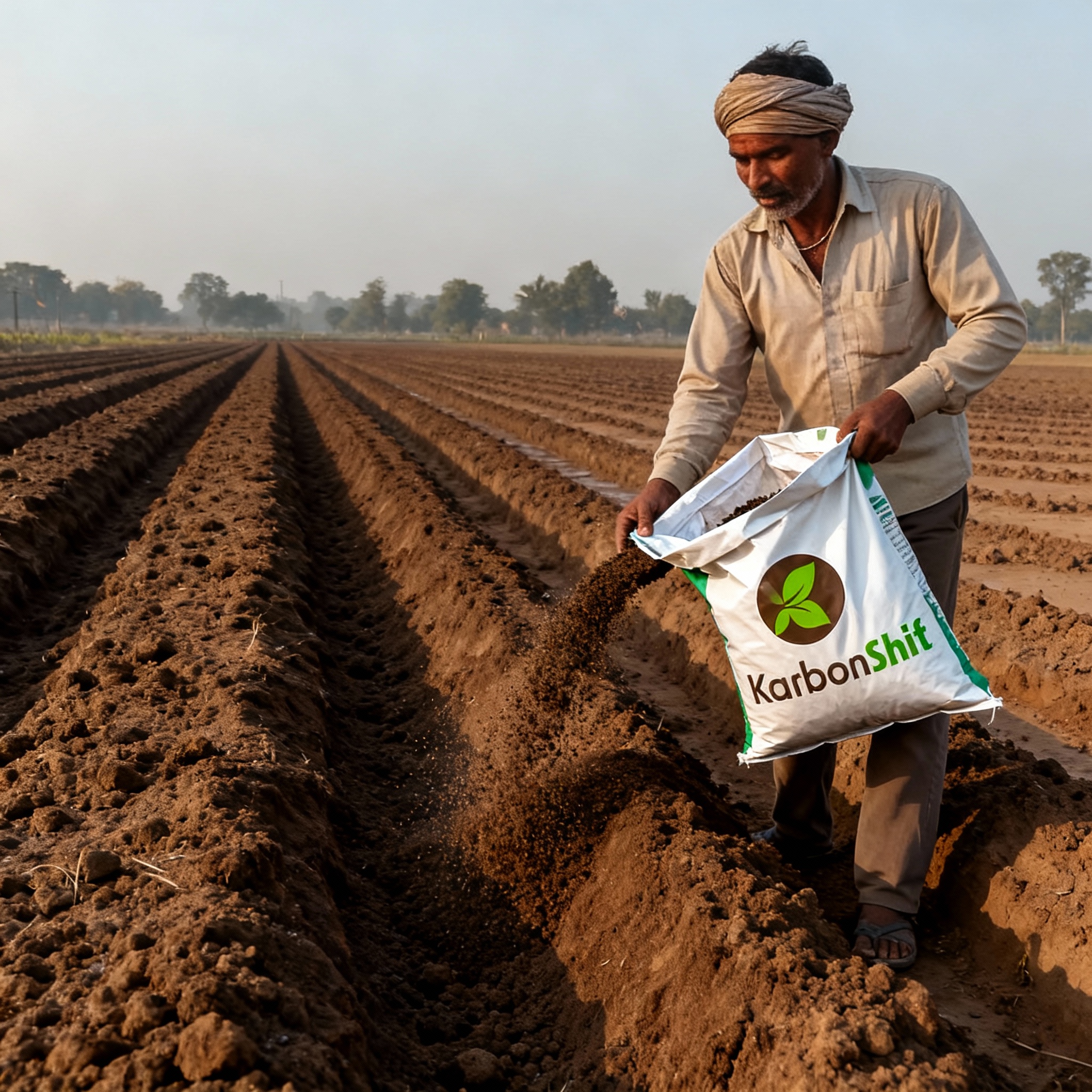
The products returned to farmers help rebuild soil carbon, improve moisture retention, support microbial life, and strengthen crop resilience. This closes the regenerative loop — season after season.

Rebuilds soil carbon, improves structure, and supports healthy root systems
Farmers avoid residue burning by turning waste into raw biochar.
Every village scales this movement through champions, fabricators, and farmers.
Villages don’t just adopt the process — they expand it. As more raw biochar is collected and transformed, more soil regeneration products return to the fields. Over time, entire landscapes shift from depletion to restoration.